
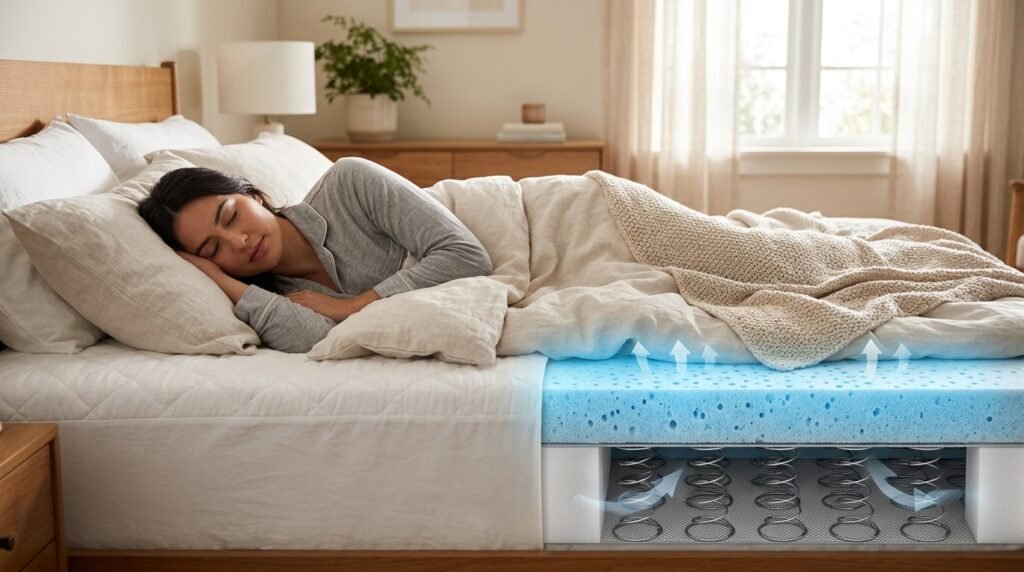
Do you often wake up feeling hot, sweaty, or uncomfortable even when your room feels cool? Your mattress material could be one reason. The materials inside your mattress influence how heat moves away from your body, how much air circulates through the surface, and how comfortably you sleep throughout the night.
Choosing a cooling mattress starts with understanding how different materials respond to body heat. Memory foam, traditional foam, cotton, and spring systems each have distinct properties that can affect temperature regulation. Knowing these differences helps you choose a mattress that fits your sleeping habits, room conditions, and comfort needs.
How Does Mattress Material Affect Sleep Temperature?
Mattress material affects sleep temperature through three main factors: heat retention, airflow, and moisture management. Some materials allow air to circulate more freely, while others conform closely to the body and may retain more warmth.
Here is how these factors influence your sleep:
- Heat retention: Materials that trap more body heat can make the sleeping surface feel warmer.
- Airflow: Open structures and ventilation channels can help warm air escape and support better temperature regulation.
- Moisture management: Materials that allow moisture to evaporate can help the sleeping surface feel less damp.
Your bedding, bedroom ventilation, humidity, and sleepwear also affect how hot or cool you feel at night. Therefore, a mattress should be considered part of your overall sleep environment rather than the only cause of nighttime overheating.
How Different Mattress Materials Affect Sleep Temperature
Each mattress material has different characteristics. Understanding them can help you identify which option may suit your temperature preferences.
1. Memory Foam Mattress: Contouring and Heat Retention
A memory foam mattress responds to body heat and pressure, allowing it to contour closely around your body. This design can help distribute pressure and create a supportive sleeping surface.
However, traditional memory foam can retain heat because its close contouring reduces the open space around your body. Some sleepers may notice this more when they sleep for long periods in one position or live in a warm bedroom.
Modern designs may include gel infusions, ventilation channels, or open-cell structures to help manage heat. These features can improve the temperature experience, although results depend on the foam formulation, mattress construction, and surrounding bedding.
Who may prefer it? Sleepers who value body contouring and pressure relief may appreciate memory foam, particularly when they choose a design with suitable cooling features.
Read More: Does Memory Foam Get Hot?
2. Traditional Foam Mattress: Support and Insulation
A traditional foam mattress can offer a balance of cushioning and support. Its temperature performance depends on the foam’s density, structure, thickness, and the layers used in the mattress.
Denser foam may limit airflow compared with more open structures, potentially making the surface feel warmer. However, not every foam mattress behaves the same way, and some designs incorporate ventilation or breathable covers.
For people living in warmer areas of Pakistan, such as Lahore, Multan, or Karachi, bedroom ventilation and bedding choices can be especially important when using foam mattresses during hot weather.
Who may prefer it? People looking for cushioning and support should compare the construction and breathability of different foam options instead of assuming all foam mattresses retain the same amount of heat.
3. Cotton Mattress: Breathability and Moisture Absorption
Cotton is commonly used in mattress covers, padding, and other bedding layers. It is valued for its soft feel and ability to absorb moisture, which can help the sleeping surface feel more comfortable.
Cotton fibers can support airflow, depending on how the fabric is woven and how the mattress is constructed. However, cotton can also hold moisture rather than quickly releasing it, so its performance depends on the material’s thickness, surrounding layers, and room humidity.
It is also important to distinguish a mattress with a cotton cover from one that uses cotton as a substantial internal filling. The two constructions can provide different temperature experiences.
Who may prefer it? People who prefer natural-feeling fabrics may appreciate cotton covers, especially when paired with breathable sheets and suitable mattress construction.
4. Spring Mattress: Airflow Through Its Structure
A spring mattress contains a system of metal springs that supports the body. The spaces around the springs can allow air to circulate within the mattress more freely than in some solid foam constructions.
This airflow may help reduce heat buildup, but the spring system is only one part of the design. Thick foam comfort layers, dense upholstery, and less breathable covers can still make a spring mattress feel warm.
There are also differences between interconnected spring systems and pocket springs. Pocket springs move more independently, while the overall temperature experience depends on the materials surrounding them.
Who may prefer it? Sleepers who tend to overheat may want to consider a spring mattress with breathable upholstery and comfort layers that do not retain excessive warmth.
Which Mattress Material is Best for Hot Sleepers?
There is no single material that works best for everyone. The right choice depends on how much you value contouring, how easily you overheat, and which construction provides the support you need.
| Mattress material | Temperature characteristics | What to check |
| Memory foam | May retain more heat because of close contouring | Gel infusions, open-cell foam, ventilation |
| Traditional foam | Performance varies with foam structure and density | Foam layers, cover fabric, airflow |
| Cotton | Can absorb moisture and provide a breathable fabric surface | Weave, thickness, internal construction |
| Spring | Open spaces may support airflow | Comfort layers, upholstery, cover material |
If you regularly wake up feeling hot, start by comparing the entire mattress rather than focusing on one material. A well-designed foam mattress with cooling features may suit you better than a spring mattress with thick, heat-retaining padding.
Likewise, a breathable cover can improve the feel of a mattress, but it cannot completely compensate for every heat-retaining layer beneath it.
Five Ways to Keep Your Mattress Cooler at Night
Your mattress is important, but a few practical changes can also help you sleep more comfortably.
1. Choose Breathable Bedding
Cotton sheets and lightweight bedding can help reduce the feeling of trapped warmth. Heavy blankets and thick synthetic fabrics may make overheating more noticeable, especially during summer.
2. Improve Bedroom Ventilation
Use a fan, air conditioning, or natural ventilation when conditions allow. In humid weather, air conditioning or a dehumidifier may help manage both temperature and moisture.
3. Check the Mattress Cover
A breathable cover can improve airflow and the feel of the sleeping surface. Look for fabric and construction details rather than relying only on labels such as “cooling” or “breathable.”
4. Consider Your Bed Base
Some bed bases restrict airflow beneath the mattress more than others. Follow the mattress manufacturer’s recommendations for the appropriate base and ventilation requirements.
5. Match the Mattress to Your Sleeping Habits
Side sleepers may prioritize pressure relief around the shoulders and hips, while back sleepers may prefer a different balance of cushioning and support. Do not sacrifice appropriate support simply to choose a mattress marketed as cooler.
How to Choose a Cooling Mattress for Your Bedroom
Before buying a mattress, consider the conditions in which you sleep. A bedroom without air conditioning may require different bedding and temperature-management strategies from a consistently climate-controlled room.
Use this checklist when comparing options:
- Identify your main concern: Decide whether you experience excessive warmth, sweating, or simply prefer a cooler sleeping surface.
- Review the internal construction: Ask about foam density, comfort layers, spring systems, and ventilation.
- Check the cover material: Breathable fabric can contribute to a more comfortable surface.
- Consider the local climate: Hot summers and humid conditions can influence how a mattress feels.
- Prioritize support: Select a firmness level that suits your sleeping position and personal preference.
- Ask about care and maintenance: Follow the manufacturer’s instructions for cleaning, rotating, and protecting the mattress.
If possible, test the mattress before making a decision. Pay attention to how the surface feels, whether it provides adequate support, and whether the construction suits your usual sleeping conditions.
The Right Mattress Material Helps You Sleep More Comfortably
Mattress materials influence sleep temperature through their ability to retain heat, allow airflow, and manage moisture. Memory foam can provide close contouring but may retain warmth, cotton can offer a breathable fabric surface, traditional foam varies by construction, and spring systems may allow greater internal airflow.
When choosing a cooling mattress, look beyond the material name. Consider the complete construction, cover fabric, bedroom conditions, and your preferred level of support. A mattress that balances these features can help create a more comfortable sleeping environment throughout the year.
Frequently Asked Questions
- Which mattress material is best for hot sleepers?
Spring mattresses with breathable comfort layers may be a good option because their internal structure can support airflow. However, some foam mattresses also offer effective temperature-management features. Compare the complete construction rather than relying on the material alone.
- Does a memory foam mattress make you sleep hot?
A traditional memory foam mattress can retain warmth because it contours closely to the body. Gel-infused foam, open-cell structures, and ventilation features may help manage heat, although the results vary between designs.
- Is a spring mattress cooler than a foam mattress?
A spring mattress may allow more internal airflow because of the spaces around its springs. However, thick foam layers and less breathable covers can reduce this advantage. The overall design determines how warm the mattress feels.
- Does a cotton mattress help reduce sweating?
Cotton can absorb moisture and provide a breathable fabric surface, potentially improving comfort. However, it does not guarantee less sweating, and absorbed moisture may remain in the material under humid conditions. Room temperature, humidity, bedding, and individual sleep patterns also play a role.
- How can I make my mattress cooler during summer in Pakistan?
Use lightweight, breathable sheets, improve bedroom ventilation, and avoid unnecessarily thick blankets. If you are buying a new mattress, compare its cover, internal layers, and airflow features. Choose a construction that suits your sleeping preferences and the temperature conditions in your bedroom.