
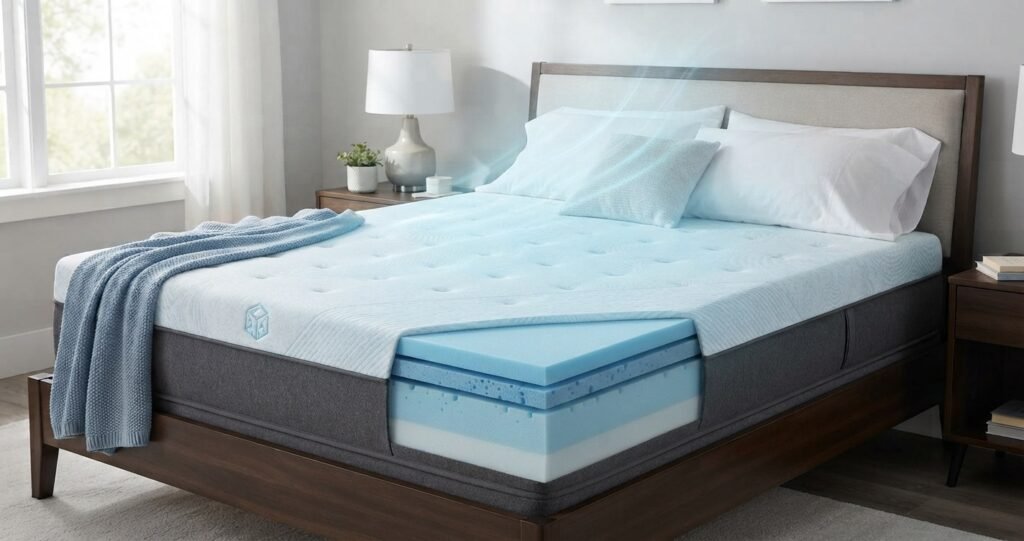
Do you wake up feeling warmer than expected, even with the fan or air conditioner running? Your bed could be part of the reason. A memory foam mattress can sometimes feel warmer than other sleep surfaces because the foam responds to body heat and closely contours around you. This can reduce airflow around the body and allow heat to build up during the night.
The good news is that not all foam beds sleep hot, and there are several practical ways to stay cooler without giving up the pressure-relieving feel many people enjoy.
Why Does Memory Foam Feel Hot?
Traditional memory foam has a dense structure designed to soften with body heat and adapt to your shape. While this helps distribute pressure, the close body contact can also trap warmth.
Three factors usually affect how warm a mattress feels:
- Foam density: Denser foam may allow less airflow.
- Body contouring: Deeper sinking means more of your body is surrounded by foam.
- Room temperature: A warm bedroom makes heat retention more noticeable.
This can be especially relevant during Pakistan’s warmer months, when bedroom temperatures may remain high even after sunset.
Does Every Foam Mattress Sleep Hot?
No. Modern foam construction has changed significantly. Many newer foam mattresses include breathable covers, open-cell foam structures, ventilated layers, gel-infused foam, or hybrid designs that improve air circulation. These features can help release heat rather than keeping it close to the sleeper.
A cooling mattress is generally designed to manage temperature through breathable materials, improved airflow, or layers that absorb and disperse excess warmth.
However, no mattress can completely control body temperature on its own. Your bedding, room ventilation, clothing, humidity, and sleeping habits also affect how warm you feel.
How to Choose a Cooler Memory Foam Bed
If you tend to sleep hot, pay attention to construction rather than choosing a mattress based only on firmness or softness.
Look for Breathable Foam
Open-cell foam contains more space within its structure, which can allow air to circulate more freely compared with very dense traditional foam.
Ventilated foam with small channels or perforations may also improve airflow through the sleeping surface.
Consider Gel or Cooling Infusions
Some foam layers contain cooling gel or other temperature-management materials. These additions are intended to absorb or distribute heat away from the body. Their effectiveness can vary depending on the full mattress construction, so it is better to evaluate the entire design instead of focusing on one material.
Check the Mattress Cover
The top fabric is the first layer touching your body. Breathable knitted fabrics, moisture-managing textiles, and lightweight covers usually feel cooler than thick, heavily padded surfaces with limited airflow.
Consider a Hybrid Construction
Hybrid mattresses combine foam with springs or pocket coils. The open spaces between coils allow more air to move through the mattress. This can make hybrids worth considering for people who want foam cushioning but prefer a more breathable sleeping surface.
Read More: Memory Foam vs Spring Mattress
Simple Ways to Sleep Cooler at Night
You may not need to replace your mattress immediately. A few changes to your sleep environment can make a noticeable difference.
Try these practical steps:
- Use breathable bed sheets. Cotton and other lightweight fabrics usually allow more airflow than heavy synthetic bedding.
- Avoid thick mattress protectors. Waterproof protectors can sometimes reduce airflow. Choose a breathable version when possible.
- Keep air moving. Use a ceiling fan, pedestal fan, air conditioner, or cross-ventilation where practical.
- Choose lighter sleepwear. Loose, breathable clothing allows heat to escape more easily.
- Reduce heavy layering. During warmer months, replace thick duvets with lighter blankets or sheets.
- Keep space around the bed. Good room airflow can help prevent warm air from becoming trapped around the sleeping area.
Memory Foam vs Other Mattress Types for Hot Sleepers
Different mattress constructions handle airflow differently.
Traditional foam: Provides close contouring but may retain more warmth depending on density and construction.
Open-cell or ventilated foam: Designed to improve air movement through the foam structure.
Hybrid mattresses: Combine cushioning layers with coils, which usually create more internal airflow.
Spring mattresses: Often have good ventilation because there is more open space inside the mattress.
The right choice depends on your preferred sleeping feel, body support needs, room temperature, and sensitivity to heat.
What Should Hot Sleepers Check Before Buying?
If temperature is one of your main concerns, ask about more than the product name.
Check:
- Whether the foam is open-cell or ventilated
- What material is used in the top cover
- Whether the bed contains gel-infused or temperature-regulating layers
- How thick the upper foam layers are
- Whether the design includes springs or pocket coils
- Whether the mattress feels deeply enveloping or more responsive
A cooling mattress should balance temperature management with proper support rather than relying on a single cooling feature.
Staying Cool Starts With the Right Sleep Setup
A memory foam mattress can feel warm, particularly if it uses dense foam, has limited ventilation, or allows the sleeper to sink deeply into the surface. However, modern breathable foams, cooling layers, hybrid constructions, and lighter bedding can significantly improve the overall sleep environment.
For warm climates, focus on airflow throughout the entire setup. The mattress, sheets, protector, room ventilation, and sleepwear all work together.
Choosing breathable materials and making a few simple bedroom adjustments can help you enjoy the contouring feel of foam without feeling unnecessarily hot during the night.
Read More: How to Choose the Best Memory Foam Mattress for Your Sleeping Position
FAQs
Does memory foam get hotter than a spring mattress?
It can. Traditional foam usually has less internal airflow than a spring mattress. However, ventilated foam, breathable covers, and hybrid construction can help reduce heat buildup.
Is gel memory foam cooler than regular memory foam?
Gel-infused foam is designed to help absorb or spread heat. It may feel cooler than conventional foam, but overall temperature also depends on foam density, cover material, ventilation, and room conditions.
What type of mattress is suitable for hot weather?
Beds with breathable covers, ventilated foam, open-cell layers, or coil-based construction are worth considering in warmer climates. The goal is to allow air to move through and around the sleeping surface.
Can a mattress protector make the bed hotter?
Yes, some thick or non-breathable protectors can restrict airflow. If you sleep hot, look for a lightweight, breathable protector that still provides the level of protection you need.
How can I make my current foam mattress feel cooler?
Use breathable cotton sheets, lighter bedding, good room ventilation, breathable sleepwear, and a thinner mattress protector. Keeping air moving around the bed can also help reduce trapped heat.