
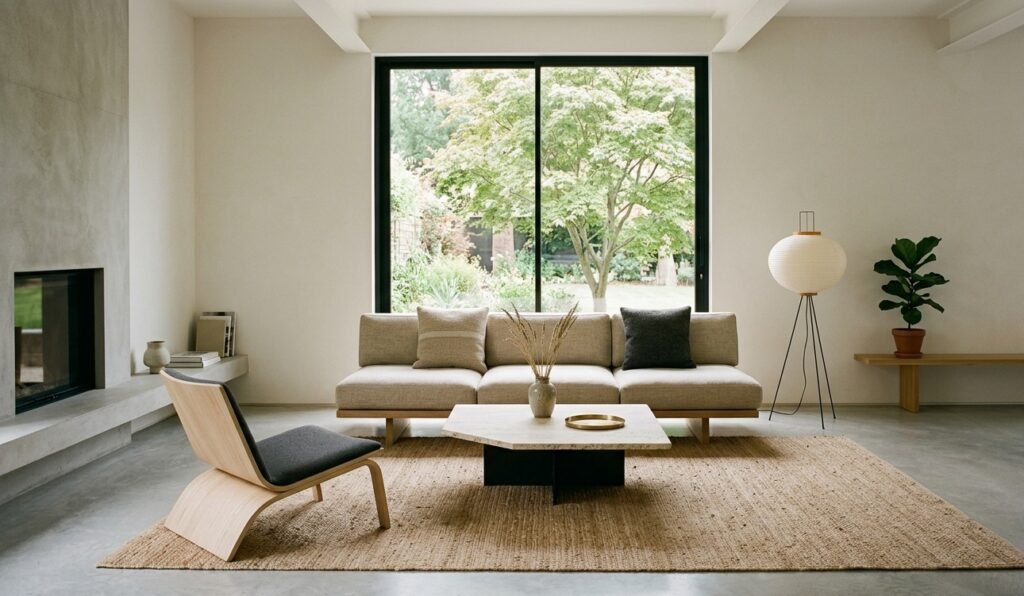
Looking to redesign your space? Interior design trends evolve, but one style that has stood the test of time is minimalism. A minimalist interior design is more than just a trend; it’s a lifestyle choice that focuses on simplicity, functionality, and elegance. It’s about creating a serene, uncluttered environment where every piece serves a purpose, and there is nothing additional or extra. The idea is to create a clean and elegant atmosphere.
If you’re considering renovating your living space or redesigning your home, embracing a minimalist style could be the key to creating a modern, sophisticated, and organized home. If you’re unsure about minimalist design, this detailed guide lets you know everything. So, let’s explore!
The Minimalist Design Blueprint
| Element | The “Less is More” Approach | Impact on Space |
| Color | 90% Neutrals / 10% Contrast | Creates a light, airy, and expansive feel. |
| Furniture | Multi-functional & Low Profile | Maximizes floor “breathing room.” |
| Decor | Single Statement Pieces | Eliminates visual noise and stress. |
What is Minimalist Interior Design?
Minimalist interior design is rooted in the idea of less is more. This style focuses on clean lines, neutral colors, and a clutter-free aesthetic. The primary goal of minimalism in interior design is to create spaces that feel light, airy, and open, rather than overwhelming or chaotic. The minimalist approach is inspired by the Japanese concept of Zen, which emphasizes simplicity and natural beauty. Minimalist design isn’t just about removing things; it’s about intentionally curating each piece in your space to create harmony.
In a minimalist home, every element has a purpose. There is no room for unnecessary decorations or objects. Instead, the space is filled with only what is needed and nothing more. The result is a peaceful, organized, and visually appealing environment.
Key Elements of Minimalist Interior Design
1. Neutral Color Palette
Minimalist interiors typically use a neutral color palette of white, beige, grey, and black. These colors help create a calm, serene atmosphere and make spaces appear larger and more open. In minimalist design, accent colors are used sparingly, often through art or select pieces of home furniture. A monochromatic scheme is common, where varying shades of the same color are used to add depth and contrast.
2. Clean Lines and Geometric Shapes
Minimalism is all about simplicity, and clean lines are a central theme. Furniture and decor pieces in a minimalist space often feature straight lines, angular shapes, and smooth surfaces. This lack of intricate detailing contributes to the uncluttered, modern look of minimalist interiors. Geometric shapes are frequently added in design elements such as rugs, furniture, and artwork.
3. Decluttered Spaces
One of the core principles of minimalist interior design is decluttering. A minimalist space has very little home furniture, no excessive decorations, and only functional items. The goal is to create a streamlined environment where every item has its place. Hidden storage solutions like built-in cabinets, drawers, and closets help maintain a clean and tidy appearance. Minimalism also encourages regular cleaning and organizing to keep spaces as clutter-free as possible.
4. Functional Furniture
In minimalist design, functionality is key. Furniture pieces are not just about aesthetics but also about purpose and utility. The furniture is typically low-profile, with pieces designed to be multipurpose. For example, a sofa might also serve as a storage unit, or a dining table could double as a workspace. The concept here is that quality should be preferred over quantity, instead of filling a space with numerous furniture pieces. Minimalism encourages choosing high-quality, well-designed furniture pieces that serve multiple functions.
5. Natural Light
Minimalist interiors emphasize the importance of natural light. Large windows, open spaces, and the strategic placement of mirrors help maximize natural light. The idea is to create a bright and airy environment that feels open and inviting. The use of light fabrics for window treatments, such as sheer curtains or blinds, helps maintain the flow of light throughout the day.
6. Simple Decor: Making a Statement
Minimalism doesn’t mean your home has to be devoid of character. Instead of filling walls and surfaces with knick-knacks, a minimalist space features statement decor pieces that stand out. These items could include a large piece of artwork, a striking light fixture, or a unique sculpture. The goal is to create a space where every item is purposeful and contributes to the overall design.
7. Neutral Textures and Materials
When it comes to materials, minimalist interiors tend to use natural textures that create warmth and depth. Wood, stone, and metal are popular choices. Textiles like cotton, linen, and wool add softness to the space, without making the room feel cluttered. These materials are used in simple ways, ensuring that the space feels grounded, natural, and calm.
How to Add Minimalist Style in Your Home?
If you’re ready to embrace the minimalist style in your home, here are some practical tips to help you get started:
1. Declutter Your Space
The first step in creating a minimalist interior is decluttering. Go through each room and remove items that don’t serve a functional or aesthetic purpose. Be ruthless in eliminating things that are unnecessary or don’t bring you joy. This could involve donating unused furniture, getting rid of excess decor, or simplifying your wardrobe. The more you clear out, the more peaceful and spacious your home will feel.
2. Invest in Quality Furniture
Instead of filling your home with numerous items, focus on purchasing a few high-quality, durable furniture pieces. Choose items that are functional, timeless, and well-crafted. Look for clean lines and simple designs that will complement the minimalist aesthetic.
3. Choose a Neutral Color Scheme
A neutral color palette forms the foundation of any minimalist space. Stick to muted tones like whites, greys, and beiges for the walls, floors, and large furniture pieces. You can add pops of color through throw pillows, artwork, or decorative objects. However, make sure to keep it subtle and restrained.
4. Maximize Natural Light
Let as much natural light into your space as possible. Remove heavy curtains or replace them with sheer fabrics that allow light to filter through. Use mirrors to reflect light and create a sense of openness. The goal is to create a bright, airy atmosphere that feels welcoming and spacious.
5. Keep Accessories to a Minimum
In a minimalist home, accessories are used sparingly. A few carefully chosen decorative items, such as a vase, a piece of art, or a statement light fixture. This is all that’s needed to enhance the space. Also, ensure to avoid cluttering surfaces with small objects or pieces of decor.
6. Embrace Open Shelving
If you have books or decorative objects you want to display, consider using open shelving. This allows you to show off your favorite items while keeping them organized and easily accessible. Just be sure to keep the shelves uncluttered by limiting the number of items on display.
Why Prefer Minimalism Over Traditional Maximalism?
Embracing a minimalist style offers several benefits, such as:
- Less stress: A clutter-free environment can help reduce feelings of stress and anxiety.
- Increased productivity: Minimalist spaces encourage focus and productivity by eliminating distractions.
- Timeless appeal: Minimalist design never goes out of style and can evolve with your tastes.
- Easier maintenance: With fewer items to clean and organize, a minimalist space is easier to maintain.
Conclusion: Transform Your Space into a Minimalist Paradise
Minimalist interior design is about more than just an aesthetic. Rather, it is a way of living with purpose, clarity, and simplicity. By embracing clean lines, neutral colors, and functional home furniture design, you can create a space that feels open, organized, and timeless.
Whether you’re renovating a single room or redesigning your entire home, incorporating minimalist principles can lead to a more peaceful, productive, and visually appealing environment. Hence, embrace the art of minimalism and transform your living space into a serene haven.
FAQs
- What are the main characteristics of minimalist interior design?
Minimalist interior design focuses on simplicity and functionality. Key characteristics include a neutral color palette, clean lines, clutter-free spaces, functional furniture, and a focus on natural light. The design prioritizes quality over quantity and emphasizes a serene, organized atmosphere where every item has a purpose.
- How can I make my home look minimalist?
To create a minimalist home, start by decluttering and removing unnecessary items. Choose a neutral color scheme, invest in high-quality, functional furniture, and limit accessories to a few statement pieces. Maximize natural light by using sheer curtains and adding mirrors to reflect light, creating a spacious, bright atmosphere.
- Is minimalist interior design expensive to implement?
Minimalist interior design doesn’t necessarily require a large budget. While high-quality furniture can be an investment, focusing on a simple, clean design with fewer items can help save money. By selecting timeless pieces that serve multiple functions, you can create a minimalist space without overspending.
- What is the best way to incorporate minimalist design in a small space?
Incorporating minimalist design in a small space involves prioritizing functionality and space efficiency. Use multi-purpose furniture, such as storage beds and foldable tables, to save room. Stick to light, neutral colors to make the space appear larger, and keep decor minimal by using only essential or statement-making pieces.