
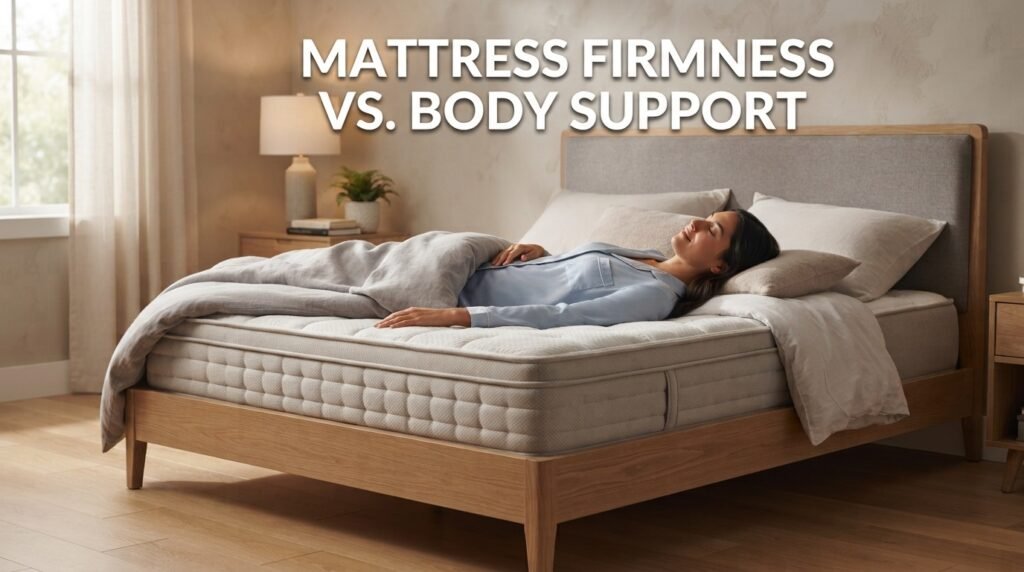
Bought a “hard” mattress for your back and still wake up stiff? You are not alone. Many people in Pakistan choose a mattress by how hard it feels in the showroom, then wonder why the pain stays. The reason is simple: firmness and support are two different things, and mixing them up leads to the wrong purchase.
Mattress Firmness vs Support: The Short Answer
Firmness is how hard or soft the surface feels when you first lie down. Support is how well the mattress keeps your spine in a straight, natural line while you sleep.
- Firmness is a feeling. It is personal.
- Support is a function. It depends on your body weight, sleeping position, and the mattress core.
A mattress can feel soft and still support you well. Another can feel like a board and push your hips and shoulders out of line.
Five Things Buyers Often Confuse
1. “Firm” Means “Supportive”
This is the most common mix-up. A hard surface does not hold your spine in place. It simply does not give way.
If you sleep on your side, a very firm top can press on your shoulders and hips. Your waist then sags toward the mattress, and your spine bends. Real support means the mattress fills the gaps under your waist and neck while your heavier areas sink in a little.
Also Read: Mattress Density vs Firmness
2. A Soft Mattress Is Always Bad for Your Back
Soft is not the problem. Sagging is.
A mattress with a soft top layer and a dense, strong core can keep your spine aligned very well. A mattress that is soft all the way down will let your hips drop, and that is where back pain begins. Ask what is under the top layer, not just how it feels on top.
Also Read: Which Mattress is Best For People with Back Problems
3. Firmness Labels Mean the Same Thing Everywhere
They do not. There is no single standard for words like “medium,” “medium-firm,” or “orthopedic.” One brand’s medium can feel like another brand’s firm.
The word “orthopedic” is a good example. It is often used as a selling label, but it does not guarantee a certain feel or a medical benefit. Look at the construction details instead: foam density, spring type, thickness, and the warranty terms.
4. One Firmness Level Works for Everyone in the Bed
Body weight changes how a mattress behaves. A lighter person may find a medium firm mattress quite hard because they do not sink in. A heavier person may find the same mattress soft because it compresses more.
This matters in shared beds. If you and your partner differ a lot in weight, aim for a middle option with a strong core. Sleep position also plays a part:
- Side sleepers usually need more cushioning at the shoulders and hips.
- Back sleepers often do well with medium to medium-firm.
- Stomach sleepers need a firmer surface so the hips do not sink.
5. A Quick Lie-Down in the Showroom Tells You Enough
Two minutes on your back will not show you how a mattress handles a full night. You change positions many times while you sleep, and heat builds up slowly.
Heat is a real issue in Pakistani summers. A dense foam mattress can hold warmth, which makes people toss and turn. Springs and hybrid builds often allow more airflow. If you can, test the mattress in the way you actually sleep, and ask about the return or trial policy before you pay.
How to Check Support Before You Buy
Use this simple routine in the store:
- Lie in your usual sleeping position for at least 10 minutes.
- Ask someone to look from the side. Your spine should look straight, not curved or sagging.
- Slide your hand under your lower back. A small gap is normal. A big gap means the mattress is too firm for you. No gap and a dipped waist suggest it is too soft.
- Roll over and check that you can move without effort.
- Press on the edge. A strong edge helps if you sit or sleep near the side.
Signs Your Current Mattress is Not Supporting You
You may need a change if you notice:
- Lower back or hip pain that eases during the day
- A visible dip where you sleep
- Numbness in your arms or shoulders in the morning
- Better sleep on a sofa, hotel bed, or guest room bed
Also check the age. Many mattresses lose their shape after several years, and daily use, humidity, and heavy weight can speed that up. If pain is constant or severe, see a doctor. A new mattress cannot treat a medical condition.
Buying Tips for Pakistani Homes
- Measure first. Sizes vary by brand, and bed frames in local homes are often custom-made.
- Ask about the core. A well-made core matters more than a thick, soft cover.
- Think about climate. If your room gets hot, ask about airflow and cooling features.
- Check the warranty. Read what counts as a sagging defect and how it is measured.
- Avoid chasing labels. Judge a mattress by how your body feels on it, not by the word on the tag.
Support First, Firmness Second
Firmness tells you how a mattress feels. Support tells you how it treats your spine through the night. Choose support first, based on your body weight and sleeping position, then pick the firmness you like.
Before you pay, lie in your real sleeping position for at least 10 minutes and check that your spine stays straight. Ask about the core, the warranty, and the trial policy. A mattress that passes those checks is far more likely to give you a pain-free morning than one that only feels firm in the showroom.
Read More: Spring Mattress Firmness: What’s Best for Comfort and Support?
Frequently Asked Questions
Is a firm mattress good for back pain?
Not always. A firm mattress helps some people, mainly stomach sleepers and heavier adults. Many others do better with medium-firm, which supports the spine while easing pressure on the shoulders and hips.
How do I know if my mattress is too firm?
You may feel pressure at your shoulders, hips, or knees. You might also notice a gap under your lower back or wake up with sore joints. If you toss around to find a comfortable spot, the surface is likely too hard for you.
Can a mattress be soft and still supportive?
Yes. A soft top layer on a strong, dense core can cushion pressure points while keeping your spine aligned. The core decides support, not the cover.
Does body weight change which firmness I need?
Yes. Heavier people sink deeper and usually need a firmer, sturdier build. Lighter people sink less and often prefer a softer surface to feel the same cushioning.
How long should I test a mattress before buying?
Try at least 10 to 15 minutes in the store, in each position you sleep in. If the seller offers a home trial, use it, since your body may need a few weeks to show whether the mattress works.