
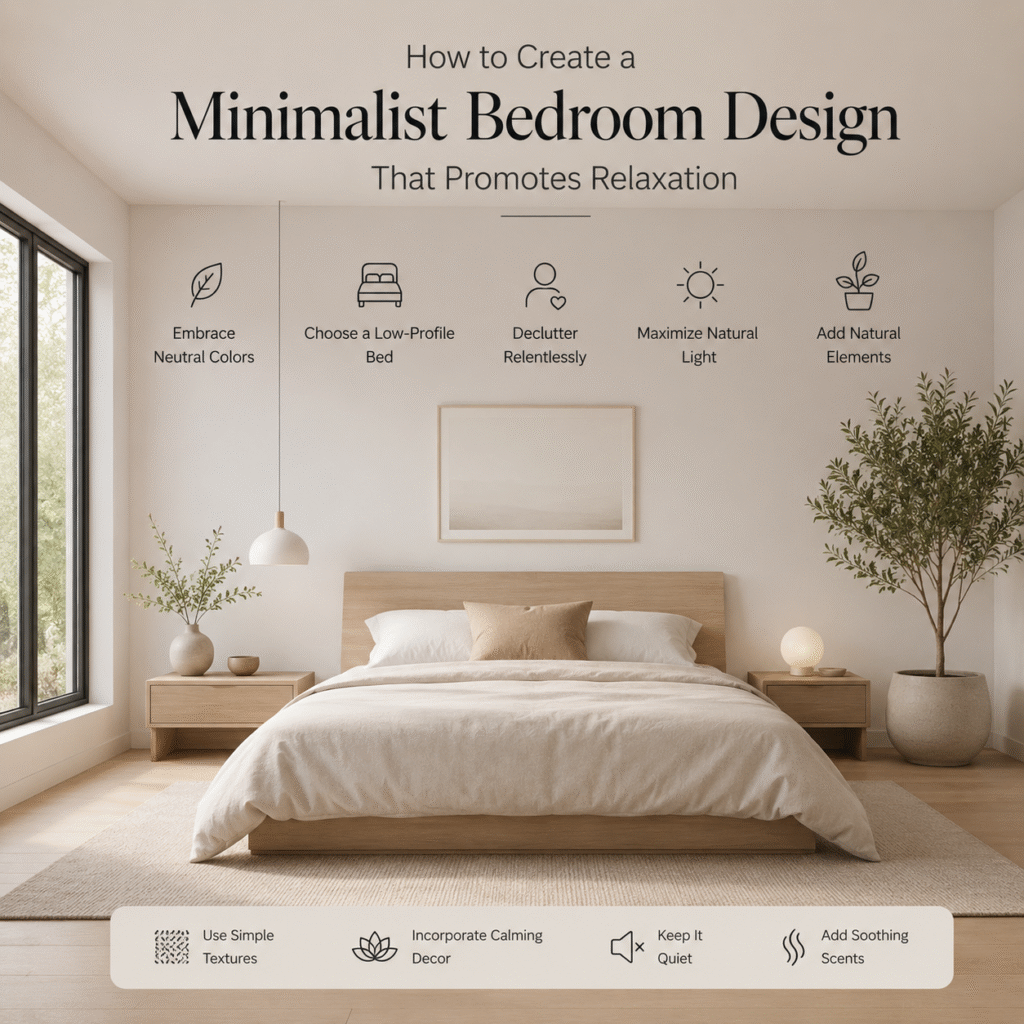
In a world driven by continuous digital connectivity and hectic daily schedules, our sensory environments are more crowded than ever. When you step into your bedroom at the end of an exhausting day, the visual space you encounter directly dictates your brain’s ability to downshift into a restful state.
Minimalist interior design isn’t simply an aesthetic trend; it is a deliberate wellness strategy. By stripping away clutter, focusing on functional clean lines, and choosing a soothing color profile, you can actively reduce your evening cortisol levels.
If you want to transform your sleeping quarters into a peaceful sanctuary, here is an objective guide to creating a minimalist bedroom design that promotes deep relaxation, along with a look at how to choose the right pieces in Pakistan’s home decor landscape.
The Core Philosophy: Visual Noise vs. Mental Calm
At its heart, minimalism operates on the rule that “less is more.” In interior psychology, clutter is recognized as a form of visual noise. When your eyes scan a room filled with excessive decorations, unorganized clothes, or mismatched bulky furniture, your brain continuously processes that information, keeping your nervous system mildly stimulated.
By creating clean architectural planes and open spaces, you allow your eyes to rest. This lack of visual distraction signals your brain that it is safe to relax, paving the way for a smoother transition into deep, restorative sleep cycles.
Step-by-Step: Building Your Minimalist Sanctuary
Transforming your bedroom into a minimalist space requires a balanced, step-by-step approach to textures, lighting, and layout.
1. Establish a Muted, Earthy Palette
Start by replacing bright, high-energy paint colors with a calming, neutral foundation. Focus on soft off-whites, warm taupes, muted greys, or gentle earthy tones. These shades reflect natural daylight beautifully during the morning and create a cozy, warm atmosphere when paired with soft evening lamplight.
2. Invest in Hidden, Functional Storage
Minimalism doesn’t mean you don’t own things—it means everything has a dedicated place out of sight. Choose furniture pieces that offer hidden storage options, such as:
- Floating side tables with sleek drawers.
- Wardrobes with clean, handle-free sliding doors.
- Storage benches that sit neatly at the foot of your bed.
3. Prioritize Low-Profile, Premium Furniture
To maximize the sense of openness in a room, choose low-profile furniture that keeps the sightlines clear. Heavy, overly carved traditional wooden furniture can dominate a room and make it feel enclosed. Instead, focus on clean, geometric bed frames and minimalist accent pieces that let the room “breathe.”
Sourcing Minimalist Pieces in Pakistan
Finding high-quality, genuinely minimalist furniture in Pakistan can sometimes be a challenge, as the traditional local market heavily favors ornate, glossy, and intricately carved woodwork. However, several modern brands have successfully shifted toward contemporary, clean-lined aesthetics.
- Interwood & Habitt: These established retail giants offer highly accessible, modular furniture systems that fit clean, contemporary layouts quite well.
- Kalamkaar & Luxury Boutiques: While known for heritage pieces, many boutique design studios now offer streamlined, transitional collections that blend clean metal accents with sleek wood grains.
- Diamond Home: For those looking to craft a premium, high-end minimalist bedroom, the contemporary collections from Diamond Home Pakistan and Kalam Kar serve as an excellent design benchmark.
Rather than relying on loud, distracting details, modern design philosophies, seen across premium Diamond Home furniture ranges, focus heavily on high-end raw materials, such as structured matte finishes, subtle metallic accents, and low-profile upholstered platform beds. Pairing a sleek, understated bed frame with clean accent seating instantly creates a refined hotel-luxury aesthetic without cluttering your room’s visual layout.
Essential Elements for a Calming Minimalist Bedroom
| Design Element | Traditional/Cluttered Approach | Minimalist/Relaxing Approach |
| Bed Framework | Heavy, oversized headboard with intricate carvings | Low-profile platform bed with clean fabric upholstery |
| Lighting Scheme | Single, harsh overhead fluorescent bulb | Layered soft lighting (warm bedside lamps & dimmers) |
| Window Treatments | Heavy, dark velvet drapes with complex patterns | Sheer linen panels or solid, neutral blackout curtains |
| Accent Decor | Multiple small knick-knacks across every surface | One or two meaningful, large-scale ceramic or art pieces |
Lighting and Textiles: The Soft Focus
A common mistake when designing a minimalist bedroom is making it feel cold, clinical, or uninviting. You can easily prevent this by introducing warmth through soft textures and layered lighting instead of adding extra physical items.
- Textual Variety: Layer your bed with high-quality, natural textiles. Combine a crisp linen duvet cover with a soft waffle-weave cotton throw blanket. This creates visual interest through touch and texture rather than relying on loud, busy patterns.
- Warm Lighting Levels: Keep your light sources close to the ground. Swap out bright overhead lighting for warm-toned bedside lamps, or install low-level LED strip lighting beneath your bed frame or behind the headboard to create a soft, floating ambient glow.
The Verdict
Your bedroom should serve as a personal charging station for your mind and body. Transitioning toward a minimalist setup isn’t about creating an empty, sterile room; it is about choosing each piece with deliberate care to cultivate a sense of order, space, and quiet.
By investing in clean-lined, high quality furniture from contemporary hubs like Diamond Home, keeping surfaces clear, and curating a neutral color landscape, you create an environment that actively quiets the mind and prepares you for a night of deep, uninterrupted rest.
Frequently Asked Questions (FAQs)
Q1: How do I display personal items in a minimalist bedroom?
Minimalism doesn’t mean hiding your personality. The trick is to follow the “rule of three” or display items in singular, deliberate groups. Instead of scattering dozens of small frames or souvenirs across a dresser, choose one large framed black-and-white photograph or a single beautifully crafted ceramic vase.
Q2: Is a platform bed frame good for small bedrooms?
Yes, absolutely. Low-profile platform beds are perfect for making compact rooms feel larger. Because they sit lower to the ground, they increase the vertical space between the bed and the ceiling, instantly giving the illusion of a more open, airy room.
Q3: How do I maintain a minimalist bedroom with a busy daily routine?
The secret lies in your storage architecture. If your bedroom furniture features easy-to-use, accessible hidden storage (like under-bed drawers or built-in wardrobe organizers), tidying up takes less than two minutes a day. When everything has a designated home out of sight, maintaining a clutter-free space becomes effortless.