
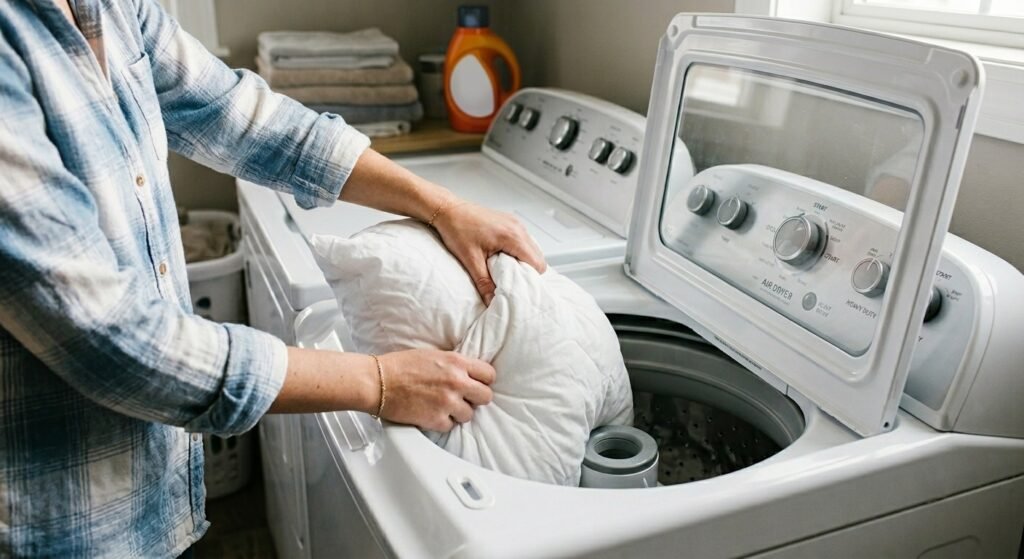
Looking to put your pillows in a dryer? Don’t do this before you read this article. You’re among many who wonder if tossing your pillows in the dryer is a good idea or just a recipe for a laundry disaster. The quick answer is that it depends on the type of pillow. Pillows are a household staple, but drying them properly is crucial to maintain their fluffiness, hygiene, and longevity.
Whether it’s your favorite feather pillow, a cozy down alternative, or a memory foam masterpiece, knowing the right drying method can save you time, money, and frustration. Let’s explore everything you need to know about safely drying pillows, common mistakes to avoid, and tips to keep them fresh and fluffy.
Why Do Pillows Need Drying?
Pillows absorb sweat, oils, and dust mites over time, which can lead to odor, mold, or even allergies. Washing is essential, but drying is just as critical. Improper drying can:
- Flatten the pillow permanently
- Cause mildew or mold growth
- Damage delicate materials like down or memory foam
- Shrink its covers or cores
Using a dryer can be safe if done correctly, but it depends on the types of pillow filling and your dryer settings.
Can You Put Pillows in the Dryer?
Different types of pillows require different drying methods. Here’s a breakdown:
Down and Feather Pillows
These can usually be tumble-dried on low heat. Adding a few clean tennis balls or dryer balls helps break up clumps and restore fluffiness.
Polyester or Synthetic Pillows
These are generally dryer-friendly. Use a low to medium heat setting and ensure the pillow is completely dry to prevent mold.
Memory Foam Pillows
Never put memory foam in the dryer, as heat can break down the foam structure. Instead, air-dry or place in a warm, ventilated spot. Some memory foam pillows come with removable covers that can be machine-dried separately.
Read More: What is the Difference Between Traditional Pillow and Cervical Pillow
Safe Dryer Tips for Pillows
Follow these steps to ensure your pillows stay clean and cozy:
- Check the Care Label: Always read the pillow’s tag for drying instructions. Manufacturers often specify the best method.
- Use Low Heat or Air Fluff: High heat can damage the fibers or foam. Stick to low heat or an air-only setting.
- Add Dryer Balls or Tennis Balls: These help fluff the pillow and prevent clumping, especially for down or feather.
- Dry One or Two Pillows at a Time: Overcrowding prevents even drying and can cause pillows to stay damp in the center.
- Check Periodically: Stop the dryer halfway to fluff and reposition them. This ensures they dry evenly.
- Complete Drying is Key: Damp pillows can develop mold and odors. If it still feels damp, continue drying or air it out.
Alternative Drying Methods
If your pillow isn’t dryer-safe, try these options:
- Air-Drying: Lay it flat in a sunny, well-ventilated area. Flip occasionally for even drying.
- Fan or Heater Drying: Position the pillow near a fan or a low-heat space heater for faster drying. Avoid direct, high heat.
- Outdoor Drying: Sunlight naturally kills bacteria and freshens pillows. Just make sure it is shielded from moisture or dew.
Tips to Keep Pillows Fluffy and Fresh Longer
Wash pillows every 3 to 6 months to prevent the buildup of sweat, oils, and dust mites.
- Use protectors to minimize dirt and moisture exposure.
- Shake and fluff daily to maintain loft.
- Rotate pillows regularly to prevent uneven wear.
Also Read: How to Use a Neck Pillow?
Conclusion: Know Your Pillow Type
Putting pillows in the dryer can be safe if you know the type of pillow, use the right heat setting, and follow proper drying techniques. Avoid high heat, overcrowding, and neglecting to check mid-cycle. For memory foam or delicate pillows, air-drying remains the best option. However, make sure to take these precautions so that your pillows can stay fresh, fluffy, and comfortable for years to come.
FAQs
- How do I dry a pillow without damaging it?
The safest method depends on the pillow type. Down or polyester can be tumble-dried on low heat with dryer balls, while memory foam should be air-dried to prevent heat damage.
- Can pillows be dried in a dryer with towels?
Yes, adding clean towels can help absorb moisture and reduce drying time. Make sure not to overcrowd the dryer.
- How long does it take to dry pillows in the dryer?
Generally, it takes 1 to 2 hours on a low-heat setting. Check every 20 to 30 minutes to fluff and ensure even drying.
- Can drying pillows in the sun ruin them?
Sunlight is generally safe and helps kill bacteria. However, prolonged exposure may fade pillow covers or weaken fabric fibers, so limit sun-drying to a few hours.