
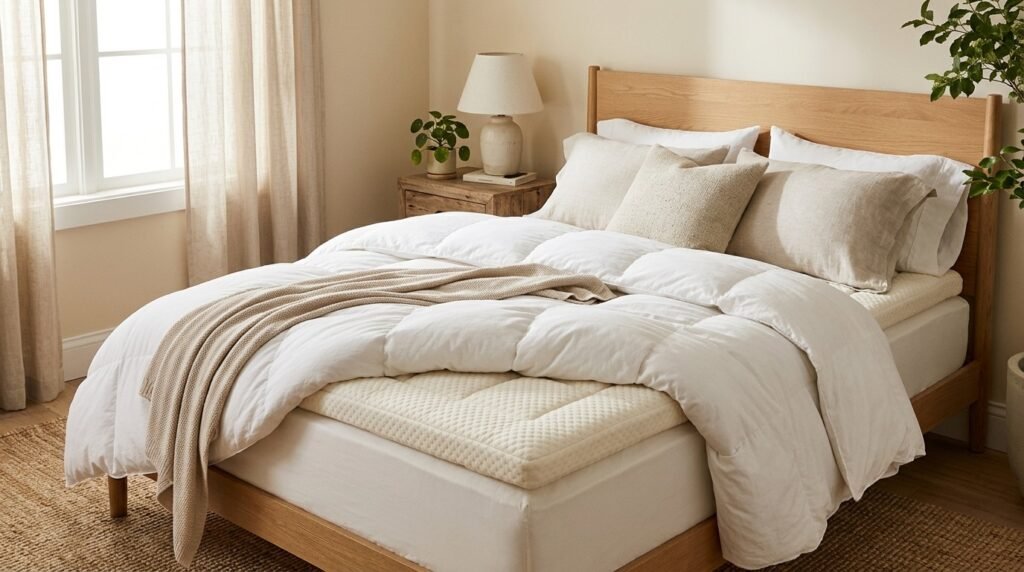
A cup of tea tips over at midnight, or your toddler has an accident. Is your mattress ready for it? A good mattress costs real money, and a single bad spill can cut its lifespan short. The solution is straightforward: put a mattress protector on it, add a mattress topper if the bed needs a different feel, and keep up a few basic cleaning habits.
Short Answer: What Keeps a Mattress in Good Shape?
- Start with a mattress protector. It blocks spills, sweat, dust mites, and allergens.
- Treat a mattress topper as an extra. Use it to change how the bed feels, not to shield it.
- Vacuum every month and let the bed breathe. This controls dust, dampness, and smells.
- Turn the mattress now and then, but only if the brand says it is designed for that.
- Give it solid support, like a slatted base or a sturdy frame.
Picture three layers: the mattress at the bottom, the protector over it, and the topper on top.
Protector or Topper: Which One Do You Need?
People often assume these are the same product. They are not.
| Feature | Mattress Protector | Mattress Topper |
| Job | Keeps out liquids, stains, and dust | Adjusts softness or firmness |
| Thickness | Barely noticeable | Typically 1 to 4 inches |
| Washing | Frequent | Occasional, usually via a cover |
| Required | Yes, for nearly every bed | Only if you want a change |
Protectors defend. Toppers adjust. Many people end up using both.
Also Read: Mattress Topper vs Mattress Protector
Picking a Mattress Protector That Works
The best mattress protector guards the mattress without turning your bed into a sauna or rustling every time you move.
Features worth checking
- A waterproof or water-resistant backing. It should be breathable, not stiff like a plastic sheet.
- The right size and depth. Measure your mattress height, then choose a fitted style with deep pockets.
- A soft top surface. Cotton or cotton blends feel nicer than slick synthetic finishes.
- Machine-washable fabric. Read the label for safe water temperatures.
- Allergen protection. A good pick if dust or pollen sets off sneezing.
Keeping cool in summer
Summers in Lahore, Karachi and Multan are tough on bedding. A heavy, non-breathable protector holds heat, so go for a thin, airy one and keep a fan or AC running. During winter, a quilted version is a fine choice.
Picking a Mattress Topper That Suits You
A mattress topper can take the edge off a firm bed or give an aging, soft one a bit more support. Use it to fix a specific problem, not to mask a mattress that has worn out.
Main topper materials
- Memory foam: Molds to your shape and eases pressure on shoulders and hips. It may feel warm in hot weather.
- Latex: Bouncy and more breathable, though usually heavier and pricier.
- Polyfill or fiber: Light and fluffy, but it loses shape sooner than foam.
- Cotton or wool fill: Natural and good at handling moisture, which suits milder temperatures.
Smart buying advice
- How thick should a mattress topper be? Choose thickness by sleep position. Side sleepers often like more cushioning, while back and stomach sleepers tend to prefer a thinner, firmer layer.
- For foam, ask about density. Denser foam usually holds up longer.
- Look for elastic corner straps or a fitted skirt so the topper stays in place.
A deeply sagging mattress cannot be rescued by a topper. If yours has dips, it is time for a new one.
Cleaning Routines That Add Years to Your Bed
Protectors and toppers do their best work when you pair them with regular care.
Every week
- Launder your sheets and protector, ideally once every one to two weeks.
- Fold back the covers for a few minutes each morning so trapped moisture can escape.
Every month
- Run a vacuum with an upholstery nozzle over the whole surface.
- Check for stains and damp spots.
Every few months
- Rotate or flip the mattress if the manufacturer recommends it. Many newer models are made to be used on one side only, so read the guide first.
- Let the bed air out in a ventilated room. Skip long hours in strong direct sunlight, since it can harm foam and fabric.
Getting Stains Out of a Mattress
Speed helps. Fresh marks lift far more easily than dried ones.
- Blot gently. Press a dry, clean cloth onto the spill. Do not scrub.
- Make a mild solution. Mix a few drops of gentle dish soap into cold water.
- Dab the spot with a lightly dampened cloth. Never saturate the mattress.
- Cover with baking soda to absorb odors, and leave it for several hours.
- Vacuum up the powder and let the area dry completely before making the bed.
Tough stains call for a look at the care label first. Bleach and strong chemicals can ruin mattress materials.
Habits That Quietly Wear Out a Mattress
- Leaving the mattress unprotected because it still looks clean
- Perching or bouncing on the edges, which weakens the support there
- Laying it directly on the floor, where moisture gets trapped
- Putting a damp protector or topper back on the bed
- Overlooking warranty rules, since stains or damage can cancel coverage
A slatted base with narrow gaps gives the mattress proper support and lets air circulate, which helps prevent sagging.
Care That Keeps Your Mattress Lasting
Begin with a breathable mattress protector, bring in a mattress topper only when your sleep calls for it, and stay steady with simple cleaning habits. Wash the protector often, vacuum the surface each month, and give the bed room to breathe. These small routines take only a few minutes, yet they prevent most of the damage that cuts a mattress short.
Before you buy anything, measure your mattress depth and check the care labels. A well-fitted protector and a topper suited to your sleep style will serve you far better than a pricey add-on that slips or overheats. Look after the basics now, and your bed will stay clean, supportive and ready for years of good sleep.
FAQs
Is a mattress protector still necessary when I own a topper?
Yes. A topper does not block liquids or sweat from soaking through. Place the protector on the mattress first, then the topper, and add a cover over the topper if needed.
How frequently should I wash my mattress protector?
Once every one to two weeks works well. Wash it sooner after a spill or illness. Follow the label’s temperature guidance and make sure it dries fully.
Will a mattress topper soften a hard mattress?
Yes, a plush topper can take the hardness down. It cannot repair a sagging or collapsed mattress, though.
Do waterproof protectors make the bed hot?
Some do, mainly thick, plastic-backed ones. Thin, breathable membranes with a cotton surface sleep much cooler, which helps in summer.
What is the best way to keep a mattress from smelling stale?
Ventilate it often, wash bedding every week, and sprinkle baking soda on the surface before vacuuming it away. Good airflow in the room also reduces trapped dampness.