
Have you ever woken up with a stiff neck even after a full night’s sleep? Many people assume that any pillow can provide a good night’s rest, but your choice of bedding significantly affects your sleep quality, posture, and long-term spinal health.
Two of the most common options are the traditional pillow and the cervical pillow. While they may look similar at first glance, they are engineered for very different purposes. This detailed comparison will help you understand the differences and choose the right one for your sleeping style and health needs.
What is a Traditional Pillow?
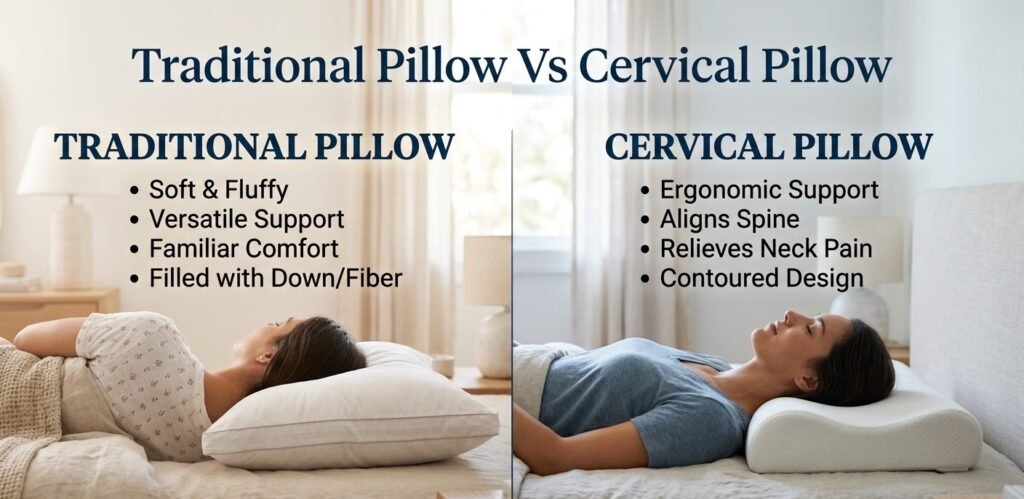
A traditional pillow is the standard rectangular pillow found in most bedrooms. These are primarily designed for immediate comfort and plushness rather than medical or orthopedic correction.
They typically feature a variety of fills, including:
- Natural Materials: Cotton, feathers, or down.
- Synthetic Materials: Polyester fiberfill.
- Adaptive Materials: Shredded memory foam or latex.
Key Features of a Traditional Pillow:
- Standard Shape: Flat or slightly curved rectangular design.
- Versatility: Soft and flexible, making them easy to fluff or fold.
- Accessibility: Affordable and widely available in various loft (height) levels.
- General Use: Best for sleepers who do not experience chronic neck or back issues.
Also Read: Do Coccyx Cushions Really Work in Pain Relief?
What is a Cervical Pillow?
A cervical pillow, often referred to as an orthopedic pillow, is specially engineered to support the natural “C-curve” of your neck and spine. Unlike traditional pillows, these are therapeutic tools designed to maintain proper spinal alignment throughout the night.
Most cervical pillows feature an ergonomic contour: raised edges to support the neck and a center dip to cradle the head. Because of this specialized design, they are frequently recommended by chiropractors and physical therapists.
Key Features of a Cervical Pillow:
- Ergonomic Contour: Specifically shaped to fill the gap between the mattress and the neck.
- Structural Support: Usually made from high-density memory foam or medical grade orthopedic foam.
- Postural Correction: Designed to reduce pressure on the cervical vertebrae.
- Targeted Relief: Ideal for back and side sleepers who need consistent support.
Cervical pillows are highly beneficial for those dealing with:
- Chronic neck pain or stiffness
- Cervical spondylosis
- Morning headaches or shoulder tension
- Poor sleeping posture
Traditional Pillow vs. Cervical Pillow: Key Differences
The primary distinction lies in intent. A traditional pillow prioritizes a “cloud-like” feel, whereas a cervical pillow prioritizes skeletal alignment.
| Feature | Traditional Pillow | Cervical Pillow |
| Primary Purpose | General comfort and softness | Neck and spinal alignment |
| Shape | Standard rectangular | Contoured/Ergonomic |
| Neck Support | Minimal/Variable | High-level targeted support |
| Spinal Alignment | Often allows the neck to tilt | Promotes neutral posture |
| Core Material | Cotton, feathers, polyester | Memory foam or orthopedic foam |
| Best For | Sleepers without pain | Neck pain or posture issues |
| Firmness | Soft to Medium | Medium to Firm |
| Sleeping Position | All positions (versatile) | Best for back and side sleepers |
| Medical Benefit | General relaxation | Therapeutic & Orthopedic |
Which Pillow is Better for Neck Pain?
If you suffer from persistent neck pain, a cervical pillow is almost always the superior choice. Its structured design prevents the head from sinking too low or being pushed too high, which are the leading causes of muscle strain during sleep.
While traditional pillows may feel softer at first touch, they often lose their shape during the night, leaving your neck unsupported. However, if you prefer a softer feel, look for a “contoured memory foam” option that bridges the gap between comfort and clinical support.
How to Choose the Right Pillow for You
To decide between these two options, evaluate your specific needs based on these three factors:
- Your Sleeping Position
- Back Sleepers: Cervical pillows are ideal for maintaining the neck’s natural curve.
- Side Sleepers: Contoured support fills the space above the shoulder to keep the spine straight.
- Stomach Sleepers: A thin, soft traditional pillow is usually better to prevent overextending the neck.
- Existing Health Issues
If you deal with frequent headaches, shoulder numbness, or neck stiffness, the orthopedic transition to a cervical pillow is worth the investment. - Adjustment Period
Traditional pillows are comfortable instantly. Cervical pillows have a “break-in” period where your muscles must unlearn bad habits. Give yourself at least 7–14 days to adjust to a contoured shape.
Final Thoughts
Traditional pillows are perfect for those who prioritize a cozy, familiar feel and have no underlying spinal concerns. However, if your goal is to wake up without aches and improve your long term posture, a cervical pillow is a game changer.
The best pillow isn’t just the softest one, it’s the one that aligns your body so you can wake up truly refreshed.
Frequently Asked Questions (FAQs)
1. Is a cervical pillow better than a traditional pillow?
For therapeutic support and pain relief, yes. However, for stomach sleepers or those with no neck issues, a high quality traditional pillow may be more comfortable.
2. Can a cervical pillow really help with neck pain?
Yes. By maintaining the neutral alignment of the cervical spine, it reduces pressure on nerves and prevents muscle cramping.
3. How long does it take to adjust to a cervical pillow?
It typically takes 10 to 14 days. Because the pillow is correcting your posture, you may feel slight discomfort initially as your muscles adapt to the new alignment.
4. Do I need a prescription for a cervical pillow?
No, while they are orthopedic tools, they are available for general purchase. However, consulting a physical therapist can help you choose the right height (loft) for your body type.