
For a long time, the term “mattress protector” sparked memories of crinkly, loud, and sweat-inducing plastic sheets. While those old-school covers were great at stopping spills, they were terrible at everything else—turning even the most expensive luxury mattress into a noisy, sweltering mess.
Thankfully, material science has caught up. Modern protection has moved away from the “plastic bag” feel and toward invisible engineering. Today’s high-tech protectors act as a waterproof and allergen-proof barrier that you’ll never even know is there.
Here is how to find a protector that works in silence.
1. The Membrane Holds the Key
The “plastic” feel of the past came from thick layers of PVC. High-quality protectors now use Micro-porous Polyurethane (PU) membranes. This is the same type of technology found in high-end athletic rain gear.
- How it Works: This membrane features pores that are millions of times smaller than a drop of water (keeping spills out) but significantly larger than a vapor molecule.
- The Benefit: It allows air to circulate while remaining 100% waterproof. Because the material is incredibly thin, it stays soft and flexible, moving with your body instead of crinkling under it.
2. Prioritize Natural Surface Fabrics
To ensure your protector feels like a natural part of your bedding rather than a medical supply, look at the top layer. The fabric that touches your sheets dictates the “noise” level.
- Terry Cotton: This is a classic choice. The tiny cotton loops soak up moisture and provide a soft, muffled texture that mimics a standard fitted sheet.
- Bamboo or Tencel: These are the gold standard for “silent” protection. They are naturally hypoallergenic, silky to the touch, and offer a cooling effect that synthetic polyesters simply can’t match.
- Jersey Knit: If you want a “no-slip” feel, jersey knit offers a slight stretch. This ensures the protector hugs the mattress perfectly, preventing those annoying lumps or bunches under your sheets.
3. The “Noise Test” and Fit
The “swishing” sound people hate is usually caused by two things: cheap material or a poor fit.
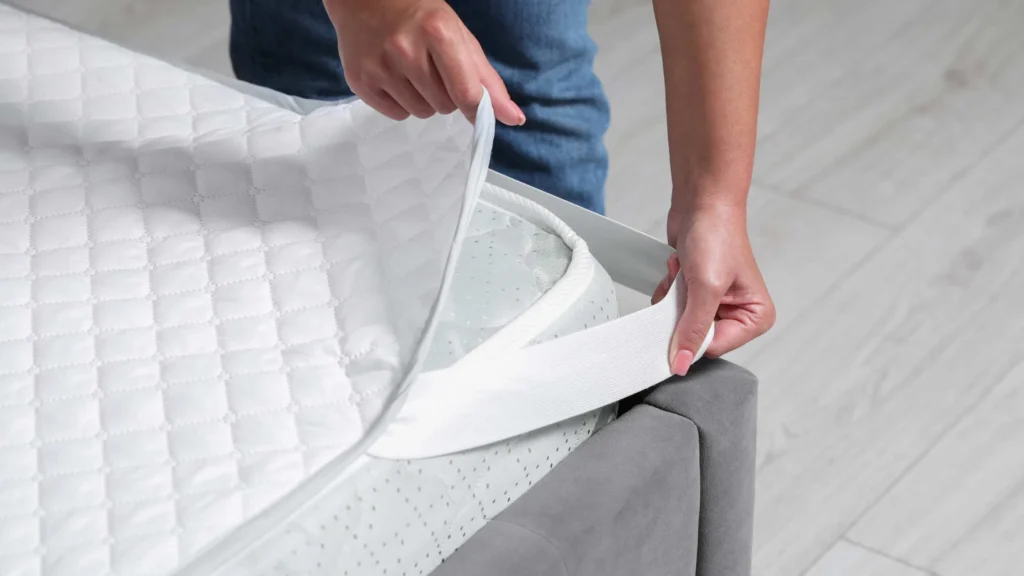
- The Snug Fit: Always choose a protector with a deep-pocketed, stretchy skirt. If a protector is loose, the fabric rubs against itself, creating noise. A “glove-like” fit keeps the material taut and silent.
- The Hand Test: If you’re shopping in person, gently crumple the fabric. If it sounds like a grocery bag, put it back. A premium protector should feel—and sound—exactly like high-quality fabric.
Why Quality Protection is a “Silent” Necessity
A mattress protector isn’t just about accidental coffee spills; it’s about the long-term health of your sleeping environment.
- Allergen Defense: A high-quality barrier is the only way to keep dust mites and pet dander from colonizing your mattress foam—a must-have for anyone with asthma or allergies.
- Hygiene Maintenance: Every night, we lose moisture and skin cells. A breathable, quiet cover prevents these from seeping into the foam and springs, which is what eventually causes mattresses to smell or degrade.
- Warranty Insurance: Most people don’t realize that a single stain can void your entire mattress warranty. A silent protector is the cheapest insurance policy you can buy for a $2,000 investment.
A mattress protector shouldn’t be a compromise; it should be an invisible guardian. By choosing micro-porous membranes and natural fibers like bamboo or cotton, you get total peace of mind without the “plastic” headache.
At the end of the day, your mattress is an investment in your health. A silent, high-quality protector ensures that when you lie down, the only thing you hear is your own breathing as you drift off into a deep, cool sleep.