
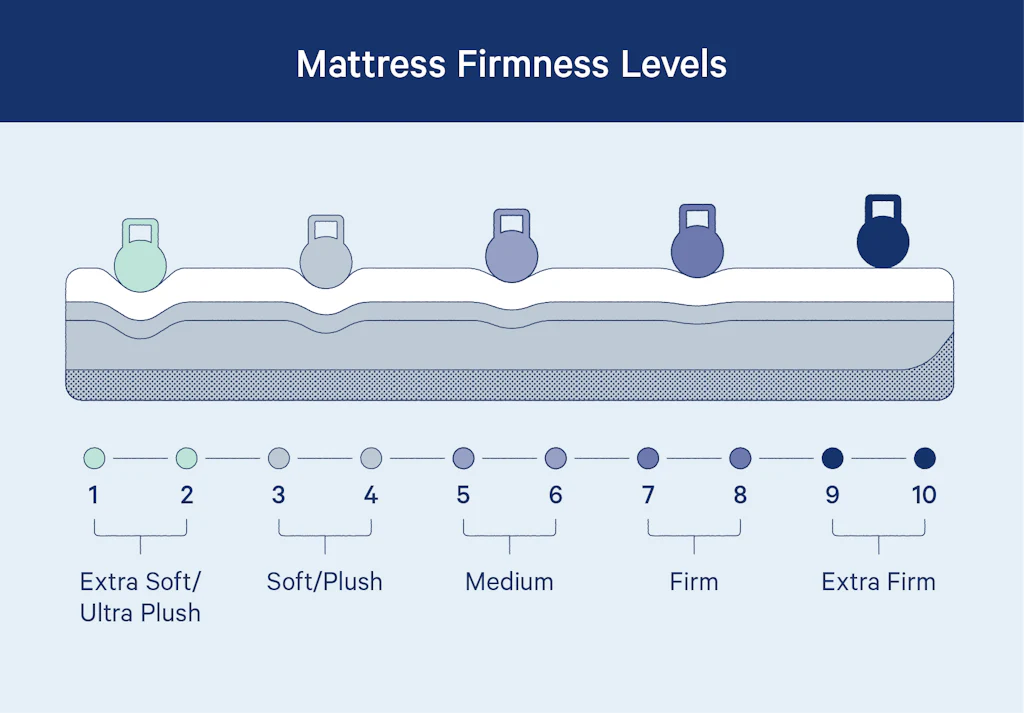
Shopping for a new mattress often comes down to one tricky factor: the firmness rating. Ranging from 1 (very soft) to 10 (extremely firm), this scale is way more than just a matter of personal taste—it’s absolutely critical for healthy sleep. Choosing the right number is essential for keeping your spine straight, relieving pressure, and ensuring long-term comfort, taking into account how you sleep, how much you weigh, and even what the mattress is made of.
Here is your straight-up guide to finding your perfect firmness number.
The Firmness Sweet Spot: Balancing Comfort and Support
Most sleepers find their ideal mattress somewhere between a firmness of 5 and 7. This is the just-right range that provides enough cushion for the shoulders and hips without letting the spine lose its natural alignment.
Think of it this way:
- Ratings 1–4 (Soft): Prioritizes sinking-in comfort and contouring; best for lightweight side sleepers.
- Ratings 5–7 (Medium to Medium-Firm): The versatile superstar; excellent for back and combo sleepers.
- Ratings 8–10 (Firm to Very Firm): Prioritizes lift and strong support; best for stomach and heavier sleepers.
How to Match Firmness to Your Sleep Position
Your preferred sleeping posture dictates precisely where you need rock-solid support versus where you need gentle cushioning.
| Sleep Position | Ideal Firmness Range (1–10) | Why This Range Works |
| Side Sleepers | 4–6 (Soft to Medium) | The priority is cushioning the pressure points (shoulders and hips). A softer feel allows these areas to sink slightly, keeping the spine straight. |
| Back Sleepers | 5–7 (Medium to Medium-Firm) | The core need is steady lower back support. This range offers lift without pushing the ribs upward. |
| Stomach Sleepers | 7–9 (Firm to Very Firm) | Requires the most support to stop the hips from sinking and arching the lower back, which is a major cause of back pain. |
| Combo Sleepers | 5–7 (Medium to Medium-Firm) | Needs a balanced, easy-to-move-on feel while providing adequate support across all positions. |
Pro Tip: If you are a heavier individual (over 230 lbs) in any position, you should usually bump up to the higher end of the recommended range (e.g., a Side Sleeper moves from a 6 to a 7) for that crucial support.
The Material Difference: Why a ‘6’ Isn’t Always a ‘6’
A firmness rating of ‘6’ on one mattress may feel completely different on another due to the materials used. Understanding these material properties is key to translating the number into a real-world feel:
| Material Type | The ‘Feel’ Difference | How it Affects Firmness |
| Memory Foam | Feels soft and highly conforming as it warms up. | A Memory Foam 6 will “hug” the body more deeply than a Hybrid 6. |
| Latex | Offers a more bouncy, instantly responsive feel with less sinkage. | Often feels firmer and cooler than memory foam at the exact same rating. |
| Hybrid | Combines sturdy coils for support with foam or latex comfort layers. | Provides a balanced, lifting feel that prevents deep sinkage and promotes airflow. |
Beyond the Number: Weight and Alignment
The firmness scale is a guide, but your body weight is the most significant factor that changes how the number feels. A heavier person will press deeper into a mattress and usually requires a firmer option to achieve the same supportive alignment as a lighter person.
Essential Alignment Checks
When you’re testing a mattress (in a store or during a home trial), stop chasing the number and focus on your alignment:
- Lie in your natural position for at least 15 minutes to allow the foam or coils to react to your body.
- The Straight Line Test: Have a partner check if your ears, shoulders, and hips are all lining up straight.
- The Gap Check: Check if there is a gap under your lower back (meaning it’s too firm) or if your hips are dipping (it’s too soft).
- Pillow Check: Remember that proper pillow alignment is just as crucial; if your neck is unsupported, the mattress won’t feel right, no matter what its number is.
Final Mandate: Always pair your new mattress with a supportive, level bed base to prevent sagging and maintain the firmness rating the manufacturer intended. By listening to your body and aligning the firmness rating with your sleeping style, you ensure a restful night and a pain-free morning.